Under the Watch Strap and Behind the Ears: The Skin You Never See Until It's Grown
Ask most Brits to check their skin and they'll do the same thing: lean into the bathroom mirror, pull down their lower eyelid and inspect their cheeks. It's understandable — the face is what we see every day, what others see first, and what the beauty industry has trained us to scrutinise.
But here's the uncomfortable truth: your face is probably the least likely place for something to go unnoticed.
The Blind Spots We All Share
Dr Helen Marsh, a consultant dermatologist who practised in the NHS for over two decades, puts it bluntly: "The face gets checked because it gets seen. But moles and skin tags don't care about your reflection. They turn up wherever skin rubs against skin, or where skin is covered and forgotten."
The classic forgotten zones, according to Dr Marsh, read like a map of everything our mirror routine misses:
- The scalp — hidden under hair, often only discovered by a hairdresser or when a comb catches
- Behind the ears — a warm, slightly creased spot that tags love
- Under watch straps and fitness bands — constant friction, zero visibility
- The small of the back — literally impossible to see without two mirrors
- Between the toes and the soles of the feet — checked so rarely that changes can go unnoticed for years
"I've had patients who could describe every freckle on their nose but had a mole the size of a five-pence piece on their back they'd never clocked," she says.
Why Friction and Cover-Ups Matter
Skin tags in particular gravitate towards friction zones — anywhere skin rubs on skin or against fabric and jewellery. That's why watch straps, waistbands and bra lines are such common sites. Covered skin is also a problem for a different reason: UV damage still penetrates thin areas like the scalp parting and the tops of ears, yet we rarely apply SPF there.
"The scalp parting is basically a sun magnet," Dr Marsh notes. "Men with thinning hair and anyone who parts their hair the same way for years should be especially aware of it."
The Two-Minute Mirror Routine
The good news? A proper check doesn't need to be a production. Dr Marsh suggests a simple routine once a month — perhaps on the first Sunday of the month, after a shower when skin is easiest to examine:
- Hair first. Use a hand mirror or ask a partner to check your scalp parting and the back of your head.
- Ears, front and back. Tilt your head and lift each ear.
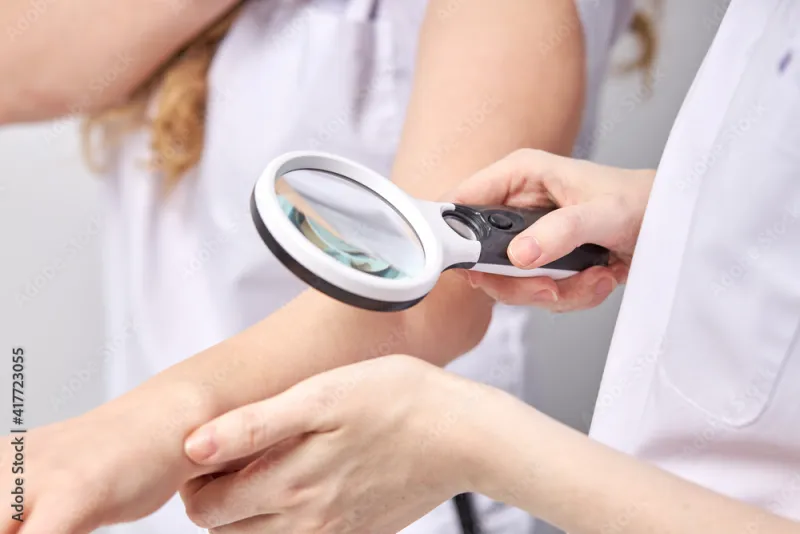
- Neck and under jewellery. Remove your watch or fitness band and look underneath.
- Back and shoulders. Two mirrors, or a phone photo of hard-to-see areas.
- Hands, feet and between toes. Including nail beds.
- Note anything new or changing. A quick phone photo with a date makes tracking easy.
You're looking for the usual warning signs: asymmetry, irregular borders, multiple colours, a diameter larger than a pencil eraser, or anything that's itching, bleeding or evolving. Skin tags are usually harmless, but anything that changes quickly, bleeds or becomes painful deserves a professional opinion.
When to Stop Guessing
Dr Marsh's final piece of advice is refreshingly no-nonsense: "A photo diary beats panic every time. If something looks different to how it did three months ago, that's your answer — get it looked at by your GP or a pharmacist first, and they'll point you onwards."
Checking the skin you can't see takes two minutes a month. Given that early detection makes all the difference, it might be the best two minutes you spend in the bathroom — even if you never glance at your eyelids once.